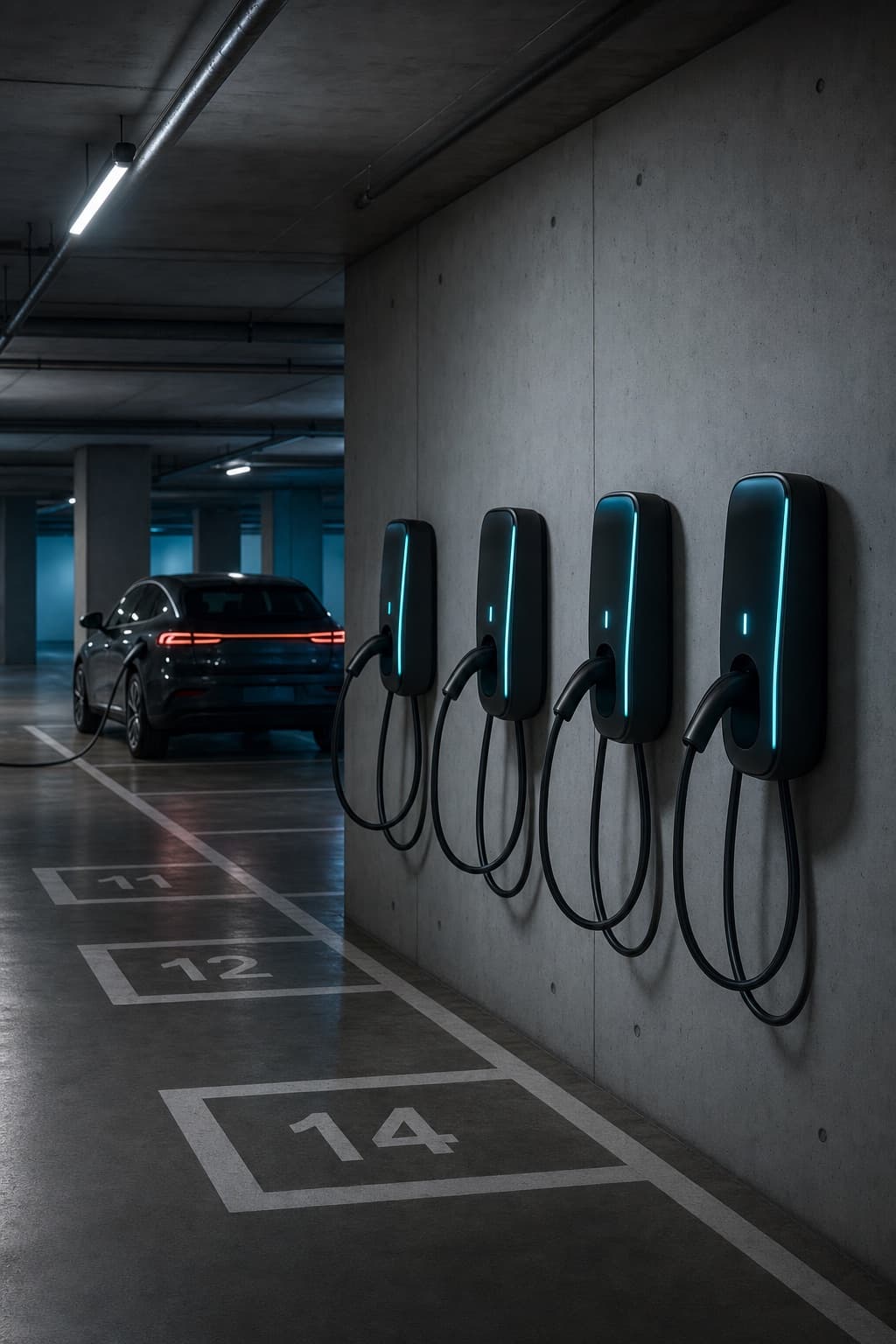
Multifamily EV charging: the electrical problem is second, the consent problem is first
In a building you do not solely own, the electrical question is the second one. The first is who has the authority to say yes, and the second and a half is how the electricity gets billed to the right person. Get those wrong and the wiring never happens.
Start with consent, not with equipment
A charger in a shared garage involves a wall or a structure that is common property, a circuit that comes from somewhere, and electricity that somebody pays for. Each of those touches the association, the landlord or the management company.
Which is why the projects that succeed start with a written proposal rather than with a purchase. The proposal answers the board's real questions: where the equipment goes, what is drilled, who pays for the installation, who pays for the power, who maintains it, what happens if the unit owner moves, and what precedent it sets for the next resident who asks.
Where the circuit comes from, and who is billed
This is the question that decides most multifamily projects, and there are three common answers.
From the unit's own panel
Cleanest for billing: the resident pays for their own charging on their own meter. It requires that the unit's panel has capacity and that a route exists from the unit to the parking space, which in a large building is frequently the obstacle.
From house power, with sub-metering
The circuit comes from the building's common supply and the usage is measured and recharged. It requires a metering arrangement and an administrative process, and it is the route most likely to serve several residents over time.
From house power, unmetered
Simplest to install and the most likely to cause a dispute at the next association meeting. Worth avoiding except where the association has explicitly decided to treat charging as a common amenity.
Capacity in a building that was not designed for this
Older residential buildings were designed for the loads of their era. Adding one charger is usually straightforward. The interesting question is the fifth one, and it is worth asking early because it decides whether the first installation is a solution or an obstacle.
- What does the building service have spare, measured rather than assumed?
- Can chargers share managed capacity rather than each taking a dedicated allocation?
- Is there a route for a shared infrastructure, a raceway along the garage, that later installations can tap into?
- Does the first installation consume the easy capacity and leave the next resident with an expensive proposition?
Boards that plan the raceway before the first charger spend a little more once and avoid five separate improvised installations. Boards that do not, get the five.
What to put in front of a board
- A specific location, with the parking space identified.
- A description of the electrical route and what it touches.
- The billing arrangement, stated plainly.
- Who pays for installation, maintenance, repair and eventual removal.
- Insurance and liability, addressed rather than left implicit.
- A licensed contractor's proposal, so the board is reading a project and not an idea.
Boards say no to vagueness far more often than to charging. A proposal that answers these six is not a request for permission, it is a decision waiting to be ratified. The technical part, meanwhile, is the same as anywhere else: capacity and route.
Frequently asked
Can my HOA refuse?
That depends on your state, your governing documents and the specifics of the proposal. Some states have statutes limiting what an association may refuse or what conditions it may impose. [To be replaced with specific, sourced statute references before publication.] This is a question for an attorney familiar with your state, not for this site.
Who pays for the electricity in a shared garage?
Whoever the arrangement says pays, which is exactly why the arrangement should be written before the equipment is installed. Sub-metering exists precisely so this does not become an argument.
Can several residents share one charger?
Physically yes, practically it depends on the parking arrangement and on how usage is tracked. Shared equipment in a fixed-space garage tends to work poorly; shared infrastructure with individual outlets tends to work better.
Last reviewed July 29, 2026.
Describe the building
Building type, parking arrangement, who authorizes the work, and whether a proposal has gone to the board yet. Providers who work in shared buildings expect all four.
Level 2 Charge Pro installs Level 2 charging equipment: the dedicated 240-volt circuit, the panel work it depends on, the cable run, and the inspection that closes the job.